



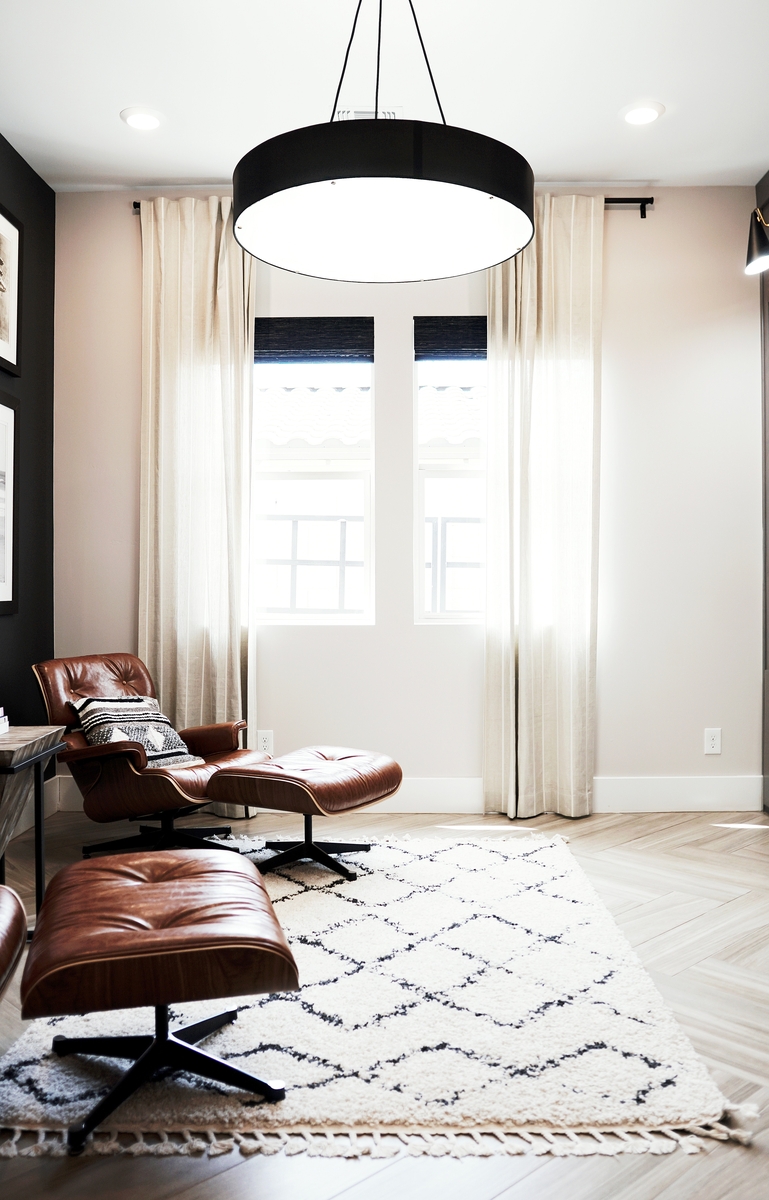
Large living room windows make a strong impression. They bring in natural light, open up your space, and highlight outdoor views. At the same time, they can be difficult to style. If left untreated, the room can feel incomplete. If the wrong drapery is chosen, the space can feel heavy or unbalanced.
Many homeowners run into this challenge. They want to enhance their windows without taking away from them. The right drapery helps you do both. It softens the space, controls light, and adds a finished look that ties everything together.
What should you consider before choosing drapes for large windows?
You should always begin with function. Style is important, but function determines what will actually work in your space.
Large windows allow in more light and expose more of your home, so your needs may differ from those of smaller windows. You should think about how you use the room throughout the day and what level of privacy you want.
Consider these questions before making a decision:
Do I need privacy, or am I mainly trying to filter light?
How much direct sunlight enters the room during the day?
Do I want a soft and cozy feel or a more open and modern look?
Will the drapery be decorative, functional, or both?
Your answers will guide your choices. For example, rooms with strong sunlight may benefit from heavier fabrics or layered solutions. Rooms that do not require privacy may work well with lighter, sheer fabrics.
What are the best drapery styles for large living room windows?
The best drapery styles for large windows are those that match the scale of the space. Small or short curtains can make large windows feel out of proportion.
You should focus on styles that create balance and enhance the size of the room.
Floor-to-ceiling drapery: This option is one of the most effective choices. It makes ceilings appear taller and gives the room a more elegant and cohesive look.
Layered drapery (sheer + solid panels): This approach allows you to adjust light and privacy throughout the day. Sheer panels work well during the day, while heavier panels provide privacy at night.
Ripple fold or wave drapery: This style offers a clean, modern appearance. It is ideal for contemporary living rooms that emphasize simplicity.
Pinch pleat or tailored pleat curtains: These styles provide a more traditional and structured look. They work well in classic or transitional spaces.
Choosing the right style helps ensure that your windows feel intentional and well-designed.
How do you choose the right fabric for large window drapery?
Fabric plays a major role in how your drapery looks and performs. It affects how the material hangs, how light passes through, and how the room feels overall.
You should consider the weight and texture of the fabric carefully:
Light fabrics (linen, cotton blends, sheers): These fabrics create a bright and airy atmosphere. They allow natural light to filter through while still adding softness to the room.
Medium-weight fabrics (textured blends): These options provide a balance between light control and structure. They are a versatile choice for many living rooms.
Heavy fabrics (velvet, lined panels): These fabrics offer maximum privacy and insulation. They also create a more dramatic and formal appearance.
For large windows, layering fabrics is often the best solution. You can combine sheer panels for daytime use with heavier drapery for privacy and comfort in the evening.
What length and width should drapes be for large windows?
Proper sizing is essential when working with large windows. Incorrect measurements can make even high-quality drapery look out of place.
You should follow these general guidelines:
Length: Drapery should always extend to the floor. Mounting the rod closer to the ceiling rather than just above the window frame helps create a taller and more open look.
Width: Panels should be at least one and a half to two times the width of the window. This ensures fullness and prevents the fabric from appearing stretched or flat.
For very wide windows or sliding glass doors, you may need multiple panels or a track system to achieve the right coverage and movement.
How do color and pattern affect large window drapery?
Color and pattern have a strong impact on the overall design of your living room. Large windows provide a wide canvas, so your choices will be more noticeable.
You should think about how your drapery will interact with the rest of the space:
Neutral tones (white, beige, gray): These colors create a clean and versatile look. They allow the view outside to remain the focal point.
Darker tones: These add depth and contrast to the room. They can help anchor a space that feels too bright or open.
Patterns: Patterns should be used carefully. Subtle patterns work well in most situations, while bold designs should be chosen to match the scale of the room and furniture.
If your living room already includes strong colors or textures, simpler drapery may be the best choice. If the space feels minimal, patterned drapery can add visual interest.
Should you layer drapery with other window treatments?
Yes, layering is often a smart choice for large windows. It allows you to control light and privacy more effectively while adding depth to your design.
Common combinations include:
Drapery paired with roller shades
Drapery paired with Roman shades
Drapery paired with sheer panels
This approach allows you to keep your drapery open for a full view while still managing sunlight with additional layers.
How do you choose hardware for large drapery panels?
Hardware plays an important role in both function and appearance. Large drapery panels require strong and reliable support.
You should focus on the following elements:
Use sturdy rods or track systems designed for heavier fabrics
Choose finishes that complement your room, such as matte black, brushed nickel, or warm brass
Install proper support brackets to prevent sagging over time
For wide window spans, a track system is often the most practical option because it allows smooth operation and a streamlined appearance.
Your home for drapes in Gig Harbor, WA
Large living room windows deserve thoughtful design. The right drapery enhances your space without overpowering it.
When chosen correctly, drapery can:
Frame your windows while preserving your view
Control natural light throughout the day
Add softness, texture, and balance to the room
Create a finished and cohesive design
With the right approach, your windows can become one of the most beautiful features in your home.
For expert guidance and a wide selection of window treatments, get in touch with us at CS Floors today. We're based in Gig Harbor, WA, and we serve Gig Harbor, WA, Tacoma, WA, Port Orchard, WA, Olalla, WA, Purdy, WA, Lakebay, WA, Key Center, WA, and Bremerton, WA.


