



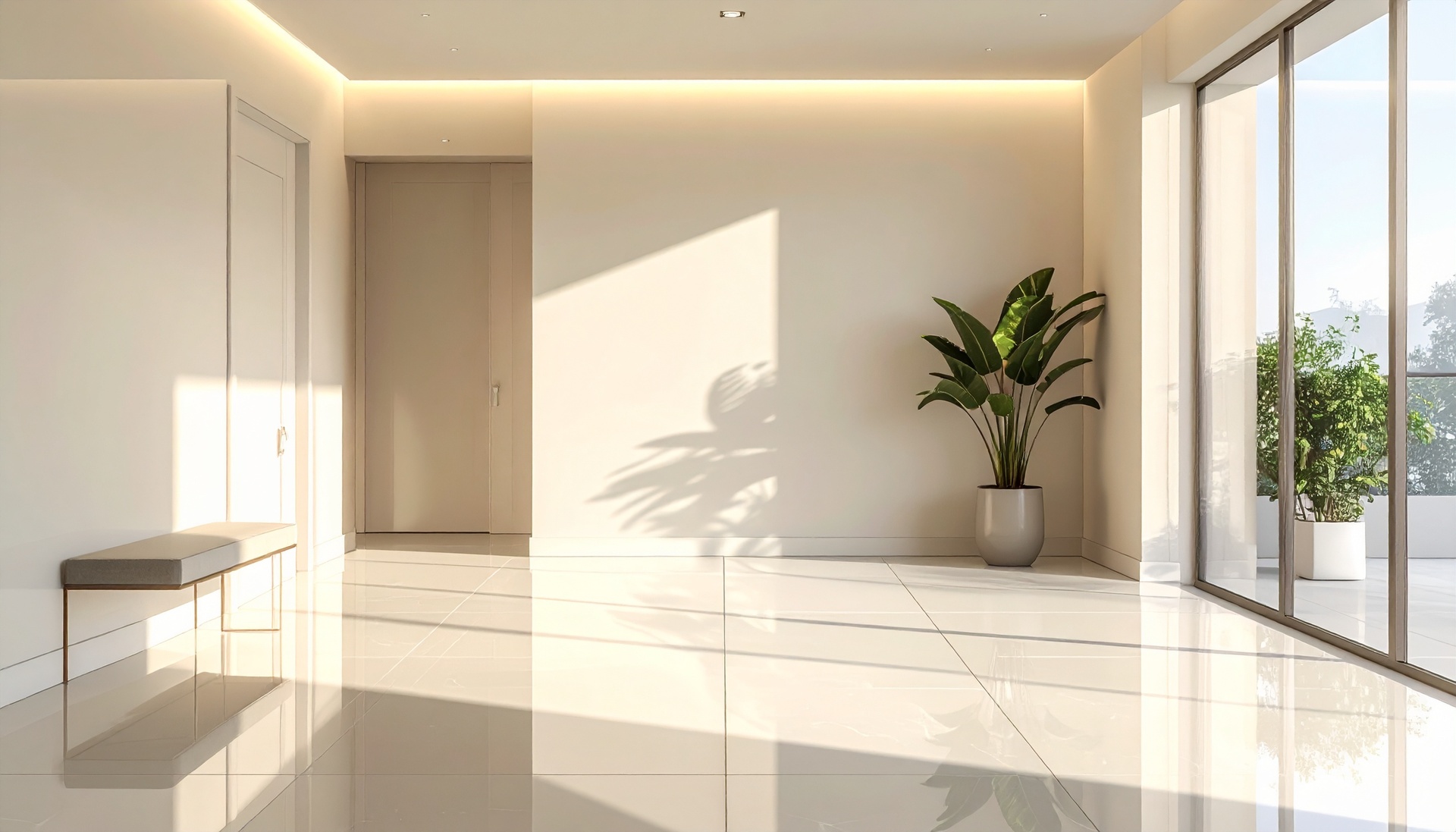
There is a design trick that architects and interior designers have leaned on for years, and it has nothing to do with knocking down walls or adding square footage. It is large format tile. If you have ever walked into a space and thought, "this feels bigger than it actually is," there is a good chance a 24x24 or 24x48 tile had something to do with it.
For homeowners in Gig Harbor, Bainbridge Island, and the surrounding area, large format tile is worth understanding well before your next renovation decision. Whether you are reimagining a kitchen, a primary bath, or an open-concept living space, the size of your tile flooring matters more than most people realize.
Why tile size affects how a room feels
The human eye naturally follows lines and patterns across a floor. Smaller tiles mean more grout lines, and more grout lines mean more visual interruptions. The eye reads those interruptions as breaks, and breaks signal boundaries, edges, and transitions. That is what makes a small tile feel busy and, paradoxically, what makes a room feel smaller.
Large format tiles reduce that visual noise dramatically. With fewer grout lines across the same floor area, the eye travels further before finding a break. The floor reads as one continuous, uninterrupted surface. The result is a sense of openness and flow that no amount of furniture rearranging can fully replicate.
The numbers behind the look
A standard 12x12 tile in a 10x10 bathroom creates roughly 100 grout line intersections across that floor. A 24x24 tile in the same space reduces that to around 20. That is five times fewer visual interruptions from the same spot you are standing in the doorway. The room has not changed. The perception of the room has changed completely.
A 24x48 plank-style tile goes even further by introducing a rectangular format that mimics the long, flowing lines of hardwood flooring while delivering the durability and moisture resistance of porcelain. In open-plan spaces, laying these tiles in a running bond or herringbone pattern creates movement and direction that guides the eye across the room rather than stopping it.
Where large format tile makes the biggest impact
Kitchens with open sightlines
Gig Harbor homes that open the kitchen into a dining or living area benefit enormously from large format tile because the floor becomes one unified visual plane across multiple zones. Rather than each space having its own distinct floor pattern, the tiles create continuity that makes the entire combined area feel expansive and cohesive.
Primary bathrooms
There is no room in the home where large format tile makes a more dramatic transformation than the primary bath. The conventional wisdom used to be that smaller rooms needed smaller tiles, but this thinking has been reversed by decades of design experience. A 24x24 porcelain tile in a modest bathroom instantly elevates it, reducing the visual clutter that comes with smaller tiles and creating a spa-like sense of calm.
Entryways and mudrooms
The entry sets the tone for the rest of the home, and in a region where wet boots and rain gear are a seasonal reality, large format tile is both a design and a practical choice. The reduced grout lines mean less surface area for moisture and grime to collect, and the scale of the tile signals quality and intention the moment someone steps through the door.
Laundry and utility spaces
Utility does not have to mean uninspired. Large format tile in a laundry room or utility area borrows the visual logic of larger spaces to make these functional rooms feel considered and well-designed rather than afterthought additions.
The installation detail that cannot be ignored
Large format tile is beautiful, but it is not forgiving of a subfloor that is not properly prepared. Tiles this size require a flatter, more precisely leveled substrate than smaller tiles. Even minor dips or humps in a subfloor that would be tolerable with 12x12 tiles will cause lippage, where one tile edge sits higher than the adjacent tile, with larger formats.
This is one reason why the quality of the installation matters as much as the quality of the tile itself. Proper substrate preparation, appropriate large-format tile setting materials, and experienced technique all come together to deliver a result that looks as seamless as it should. Cutting corners at this stage is one of the most reliable ways to end up with a floor that disappoints. The flooring services conversation should happen before a single tile is purchased, not after.
Choosing the right finish for your space
Large format tile comes in a range of finishes that each change how a space reads. Polished or semi-polished porcelain reflects light and amplifies the spaciousness effect, making it an excellent choice for interior rooms with less natural light. Matte and honed finishes bring a quieter, more grounded quality that works beautifully in kitchens and living areas where you want the floor to anchor the room without competing with it. Textured finishes add slip resistance and are worth considering anywhere moisture is a regular presence.
In Pacific Northwest homes, where overcast skies mean rooms often rely on artificial light for much of the year, a polished or lightly reflective large format tile can meaningfully brighten a space that might otherwise feel dim.
Grout color is a decision, not an afterthought
With large format tile, grout color becomes part of the design in a way that smaller tiles never quite demand. A tight, matching grout joint on a 24x48 tile can make the floor appear nearly seamless, amplifying the spaciousness effect to its maximum. A contrasting grout creates a grid pattern that adds structure and visual interest. Neither approach is wrong, but the choice should be deliberate because at this scale, the grout joint is visible in a way it simply is not on a 4x4 mosaic.
The most consistent advice from designers working with large format tile: lean toward matching or near-matching grout unless there is a specific design reason to contrast. The result tends to be more timeless and the openness effect is better preserved.
A note on rectified edges and why they matter here
Large format tile pairs naturally with rectified edges, where tiles are precision-cut after firing to exact dimensions. With tiles this large, even modest dimensional variation between pieces would create visible lippage or grout inconsistencies. Rectified tiles ensure that every plank lines up precisely with its neighbor, which is what makes those minimal, almost invisible grout joints possible. It is one of those details that is rarely noticed when it is done right and impossible to ignore when it is not.
Come see what large format tile looks like at this scale
Reading about tile is one thing. Standing on it, seeing how the light moves across a 24x48 plank, and understanding how it changes a room's feeling is another. At CS Floors, our flooring experts are here to help Gig Harbor, Tacoma, Port Orchard, Bremerton, and surrounding communities make decisions they will be happy with for years to come. Browse our tile flooring selection online or stop by our showrooms in Gig Harbor or Bainbridge Island. Contact CS Floors to get started with a personalized consultation today.


