



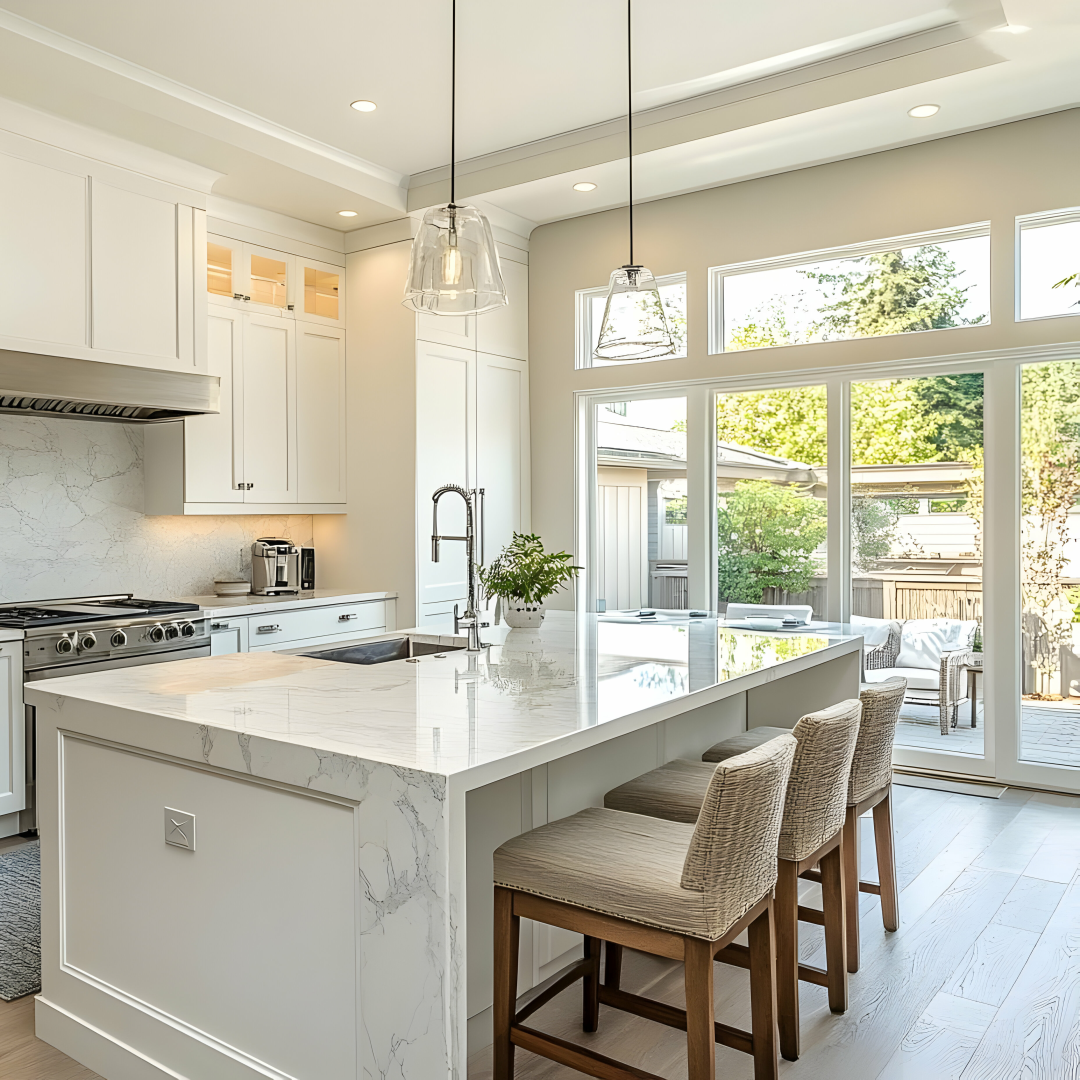
There is a moment in many kitchen projects when a homeowner realizes one countertop material cannot do everything they want. The island needs to feel like a showpiece, while the working perimeter has to shrug off daily spills, hot pans, and busy weeknight dinners. Mixing two surfaces in a single kitchen solves that tension beautifully, and it has become one of the most requested looks in kitchen design.
At CS Floors, we help homeowners across Gig Harbor and the surrounding communities think through these choices every day. Here is how mixed-material countertops work, why they are so popular right now, and how to combine two surfaces so they feel intentional rather than accidental.
What are mixed-material countertops?
Mixed-material countertops simply means using two or more countertop surfaces in the same kitchen instead of one continuous material throughout. Most often the split happens between the island and the perimeter counters, but you might also see a different surface reserved for a baking station, a bar area, or a coffee nook.
The idea is not new, yet it has grown far more popular as kitchens have become the true center of the home. When one space handles cooking, homework, entertaining, and everything in between, a single material rarely checks every box. Pairing surfaces lets each zone play to its strengths. You can explore the full range of countertops we carry to see how different materials feel side by side.
Why homeowners are pairing two countertop materials
Create zones for different tasks
Different areas of a kitchen ask for different things. A dedicated prep zone benefits from a hard-wearing, easy-care surface, while a baking corner is lovely in cool natural stone that keeps dough at the right temperature. By assigning materials to tasks, your kitchen works harder without looking utilitarian.
Balance beauty and budget
A dramatic slab of marble across an entire kitchen can stretch a budget quickly. Reserving that statement material for a smaller island or a single run of counter lets you enjoy the look you love while choosing a more practical, hard-working surface everywhere else. It is a smart way to invest where it matters most.
Add contrast and visual interest
Two materials create natural depth in a room. A warm wood island against crisp stone perimeters, or a bold veined slab paired with a quiet solid color, gives the eye something to land on. Contrast is what makes a kitchen feel designed rather than simply assembled.
Popular countertop material combinations
Some pairings have become favorites because they balance function and style so well. A few combinations customers return to again and again include:
Quartz perimeter with a natural stone island. Durable quartz countertops handle the daily grind while a marble or granite island becomes the room's centerpiece.
Granite with quartz. Two hard-working surfaces in complementary tones give you durability everywhere and a subtle shift in texture between zones.
Wood or butcher block accents with stone. A warm butcher block section softens an all-stone kitchen and makes a friendly spot for chopping and serving.
Solid surface with natural stone. A seamless, easy-care solid surface on the perimeter pairs nicely with a striking stone island for contrast.
Statement marble with a practical partner. Marble brings timeless elegance to one area, while a tougher surface elsewhere keeps everyday life easy.
How to pair two surfaces so they work together
Choose a lead material and an accent
The most successful mixed-material kitchens have a clear hierarchy. Pick one surface to dominate, usually the perimeter, and let the second act as an accent on the island or a feature area. When both materials compete for attention, the room can start to feel busy.
Coordinate color and veining
Your two surfaces do not need to match, but they should relate. Look for a shared undertone, a repeated color in the veining, or a deliberate light-and-dark contrast. Bringing samples together in the same light is the best way to see whether a pairing truly sings.
Plan for seams, edges, and the backsplash
Where two materials meet deserves real thought. Clean transitions, consistent edge profiles, and a coordinating tile backsplash help the whole kitchen read as one cohesive design. These are the details that separate a polished result from a patchwork one.
Match each surface to how you use it
Think honestly about how you live in your kitchen. If your island doubles as a homework desk and a craft table, choose something forgiving there. If you bake often, a cool stone surface earns its place. Letting daily habits guide the material choice keeps your kitchen practical for years to come.
Practical things to consider before you commit
Before you fall in love with a combination, weigh a few practical points:
Maintenance. Some surfaces need periodic sealing while others are nearly carefree, so mixing materials means keeping up with the needs of each.
Durability. Consider heat resistance, scratch resistance, and how each surface handles stains in the zone where it will live.
Budget. Reserving a premium material for a smaller area is a wonderful way to enjoy it responsibly.
Installation. Two materials can mean additional seams and templating, so working with an experienced team keeps the finished result seamless.
Design your mixed-material kitchen with CS Floors
Choosing two surfaces that live in harmony is easier with expert eyes on the project, and that is exactly what we love to do. As flooring experts and a family-rooted local business, our team helps you compare slabs, coordinate colors, and match every surface to the way your household really lives. Here is how to get started:
Visit our Gig Harbor and Bainbridge Island showrooms to see and feel materials side by side.
Browse our countertop options, including quartz, granite, natural stone, and solid surface.
Schedule a design consultation and let our team guide your combination from first idea to final install.
Ready to bring two beautiful surfaces together in one kitchen? Contact our team today and let CS Floors help you create a space that is as hard-working as it is stunning.


